
Solution
Compliance software for learning disability, autism and mental health services
These services are held to the expectations set out in Right Support, Right Care, Right Culture. Evidence needs to show that support is individualised, rights-based and free from unnecessary restriction — and that senior managers are actively overseeing it. MyCareCompliance provides the audit programme, evidence library and governance reporting to do that.
MyCareCompliance brings practical CQC audits, evidence, workforce oversight and improvement actions into one platform for adult social care providers.
7 days free, card required, £0 today. From day 8 your plan (from £24.99 a month, inclusive of VAT) is charged automatically unless you cancel before your trial ends. Features vary by plan. Compare plans and trial terms.
What compliance looks like in these services
Inspection focuses heavily on restriction, rights and culture. The questions are whether people have choice and a life of their own, whether restrictions are lawful, proportionate and reducing, whether staff are trained for the people they actually support, and whether leaders know what is happening day to day. Audit evidence has to answer those questions with records, not reassurance.
Restrictive practice oversight
Restriction is recorded, reviewed and reduced, with governance sign-off visible rather than implied.
- Restrictive interventions logged with context and outcome
- Blanket rules identified and challenged
- PRN use for distress or behaviour reviewed
- Restrictions on liberty, seclusion or segregation reviewed and authorised
- Reduction plans tracked through the improvement plan
Capacity, consent and rights
The legal framework around each person's support is a distinct evidence area and a frequent source of findings.
- Mental capacity assessments and best-interest decisions
- DoLS or Court of Protection authorisations with review dates
- Mental Health Act interfaces, including section 117 aftercare
- Advocacy involvement and family engagement
- Consent records kept current rather than signed once
Communication and involvement
Accessible communication is not an add-on; it is the evidence that people genuinely influence their own support.
- Accessible information and easy-read documents
- Communication passports and total communication approaches
- Support plans co-produced with the person
- Outcomes recorded in the person's own words where possible
- Feedback, complaints and the changes that followed
Positive behaviour support and risk
PBS plans need to be live documents that staff follow and managers review.
- PBS plans reviewed for currency and consistency
- Functional assessments and antecedent analysis
- Incident recording, debriefs and learning
- Proportionate risk assessment that enables activity
- Hospital and crisis plans kept up to date
Workforce competency and culture
Culture is evidenced through training, supervision, consistency and retention, not through a statement of values.
- Oliver McGowan-aligned learning disability and autism training
- Positive behaviour support and de-escalation competency
- DBS, right to work, references and recruitment file completeness
- Supervision, appraisal, reflective practice and observed practice
- Staff consistency, turnover and matching as culture indicators
Governance and Regulation 17
Regulation 17 expects systems that assess, monitor and improve quality, with records that show leaders already knew where the risks were.
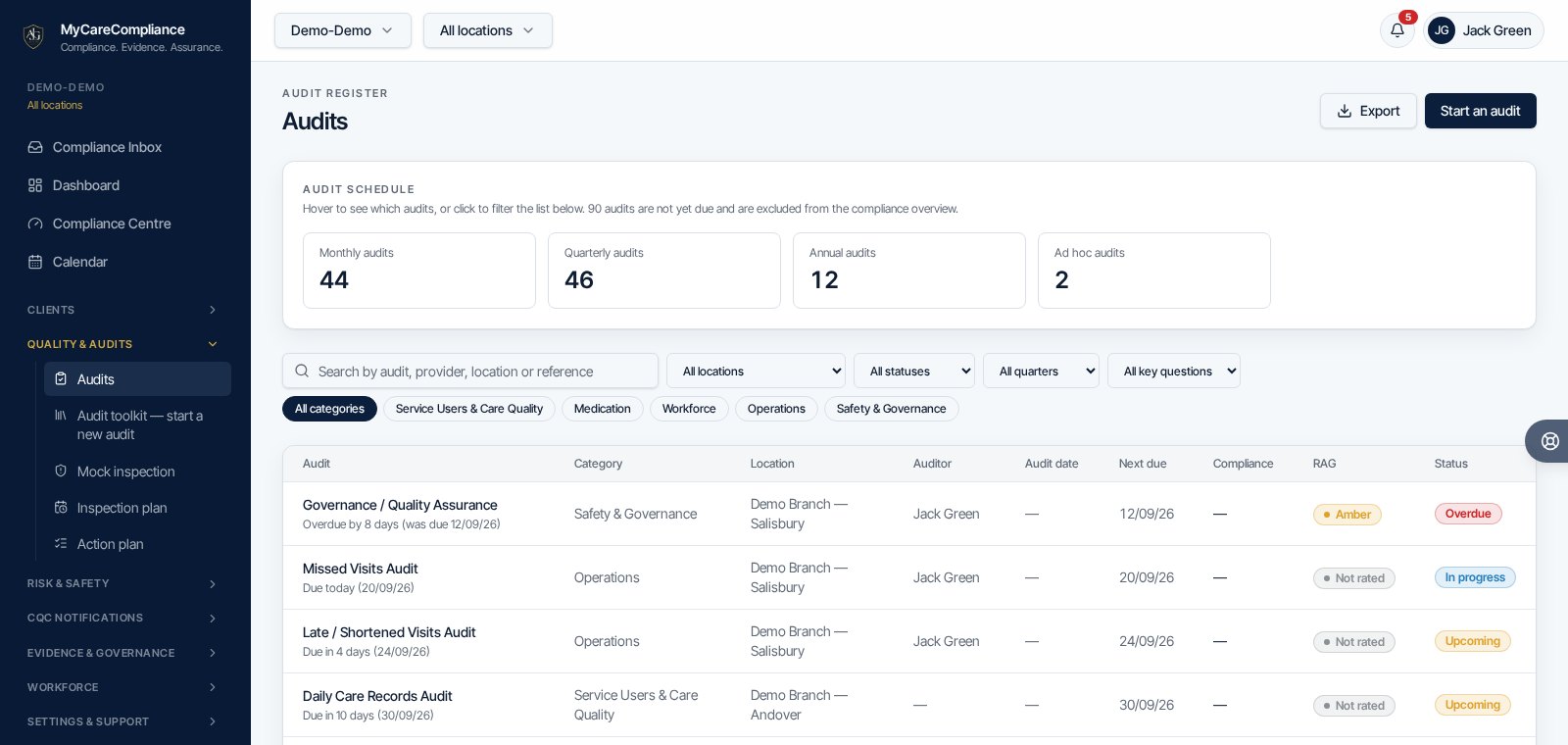
- A scheduled audit programme per service
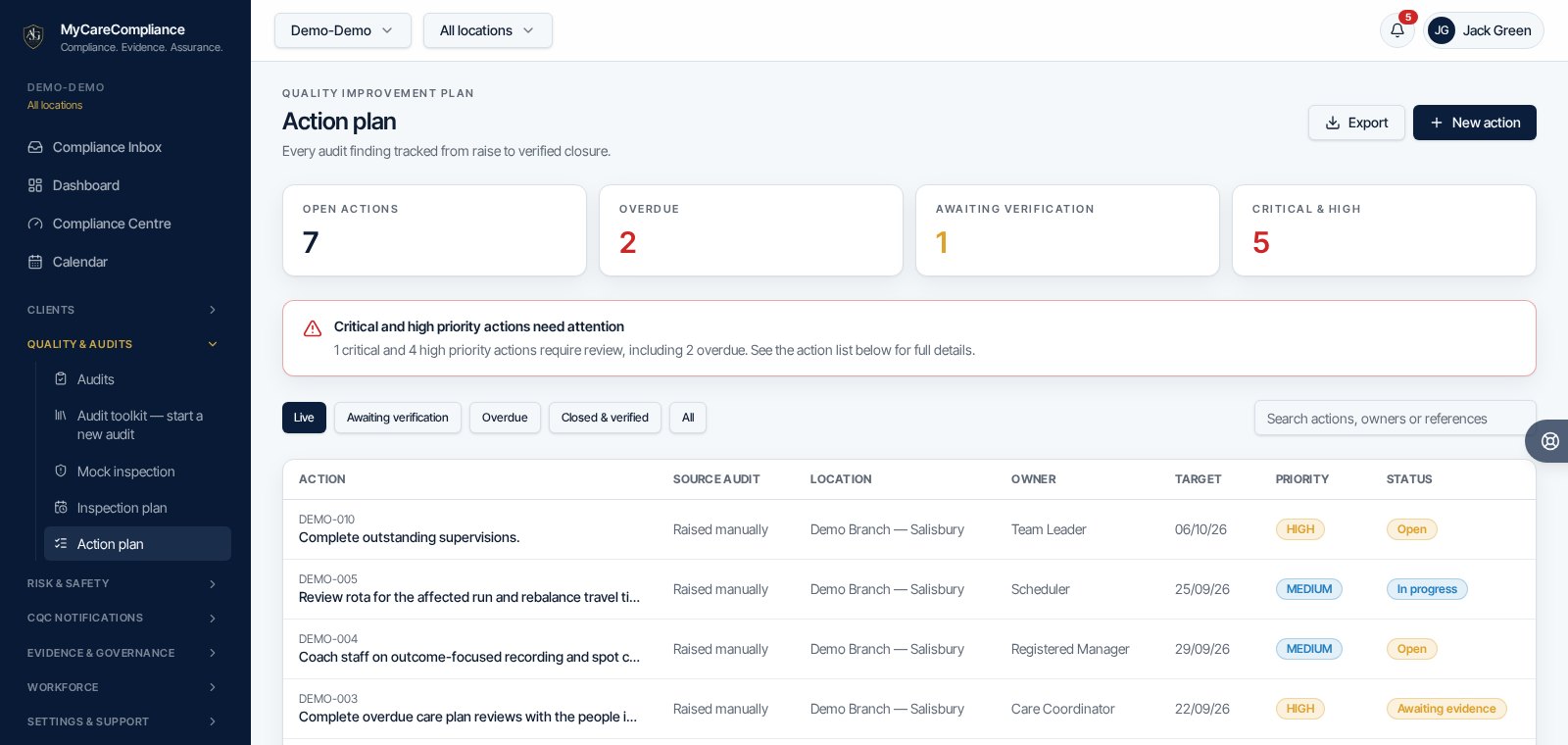
- Improvement plans with owners, priorities and due dates
- Restriction, incident and safeguarding trends reported to leaders
- Branded governance reports for provider and board meetings
- A full history of who recorded what, and when
What it looks like in the platform
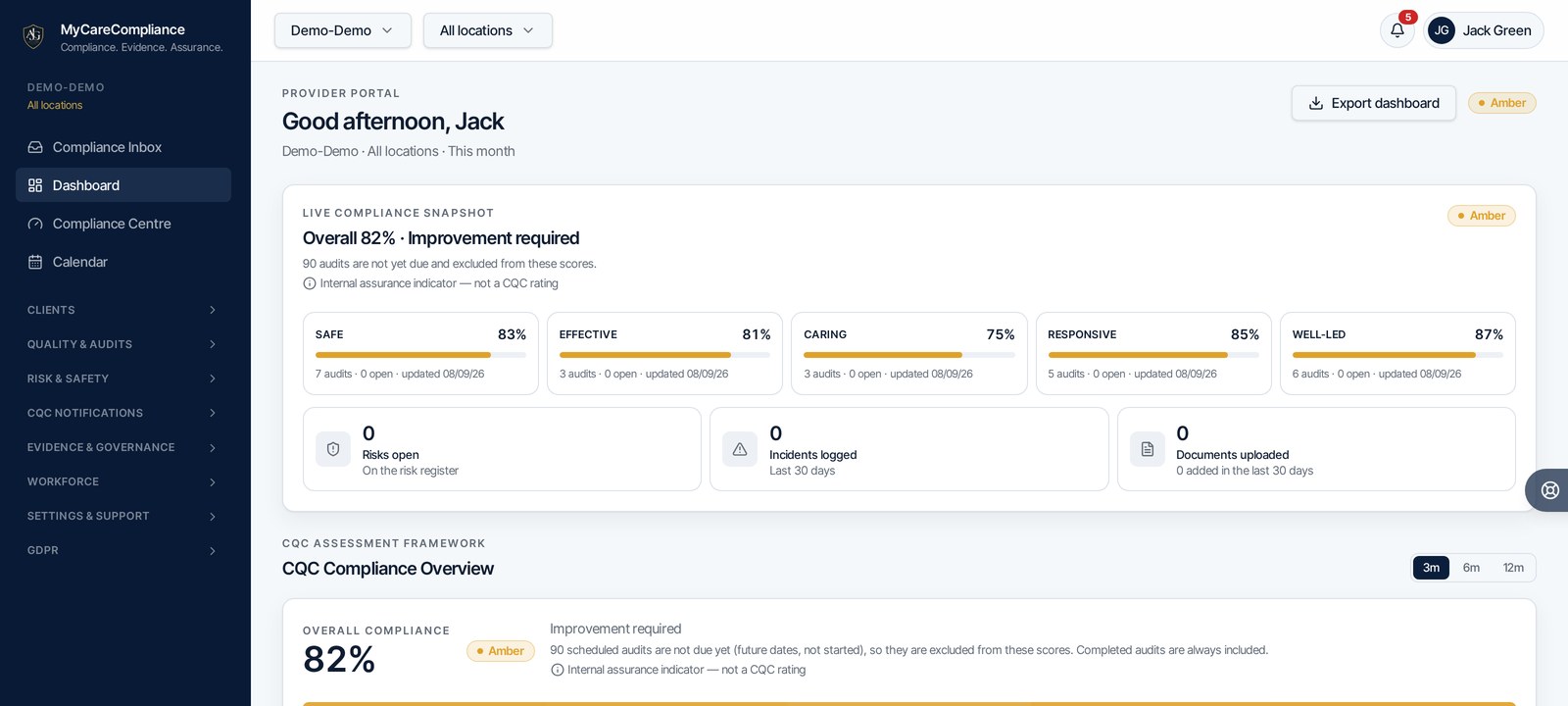
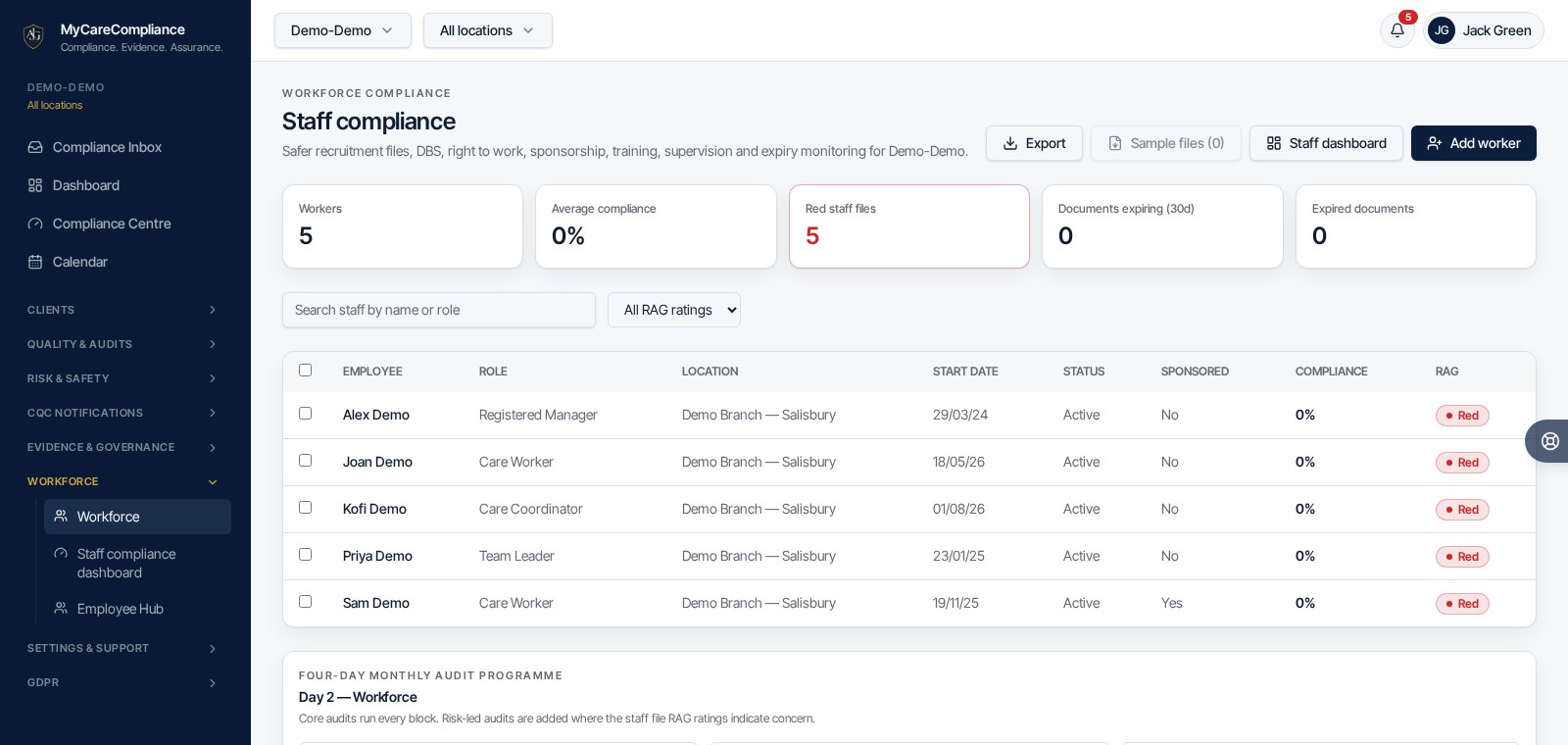
Genuine product screenshots using demo data. Scores show internal assurance, not CQC ratings. Features vary by plan.
Frequently asked questions
- Does it reflect Right Support, Right Care, Right Culture?
- Yes. The audit content tests whether support is individualised, rights-based and free from unnecessary restriction, and whether the culture of the service enables people rather than manages them.
- How are restrictive practices recorded?
- Restrictive interventions, blanket rules, PRN used for behaviour and restrictions on liberty are recorded, reviewed and governed, with reduction plans tracked through the improvement plan so progress is visible.
- Can it be used for both registered care and supported living settings?
- Yes. Each setting has its own audit programme and evidence library, and supported living services can also use the dedicated supported living audit set alongside this one.
- Does it help with staff competency in autism and PBS?
- Training in learning disability and autism, positive behaviour support, supervision and reflective practice are tracked per staff member with expiry dates, and gaps appear as actions rather than sitting in a spreadsheet.
See it with your own service
Book a free demonstration and we will walk through the platform using scenarios from a service like yours.