
Guidance · Learning disability & autism
Learning disability and autism: guidance for providers
If you support people with a learning disability or autistic people, CQC will judge your service against its Right support, right care, right culture guidance as well as the usual quality statements. This guide sets out what that means day to day, what inspectors look for, and the records that show you are getting it right.
MyCareCompliance brings practical CQC audits, evidence, workforce oversight and improvement actions into one platform for adult social care providers.
7 days free. Plans from £24.99 per organisation per month, inclusive of VAT. Features vary by plan. Compare plans and trial terms.
Last reviewed: 30 September 2026. Independent guidance from AJG Advisory — not official CQC guidance. Always check the official sources listed below for current requirements.
Who it applies to
Supported living, domiciliary care, care homes and any CQC-registered service where people with a learning disability or autistic people use the service — whether that is one person or everyone you support.
Right support, right care, right culture
CQC expects services to show:
- Right support — the model of care maximises choice, control and independence, and people live in ordinary settings in their community
- Right care — care is person-centred and promotes dignity, privacy and human rights
- Right culture — leaders and staff hold values that make sure people lead confident, inclusive and empowered lives
- In supported living, keep tenancy and care separate — people should be able to change their care provider without losing their home
Communication and accessible information
- Each person has a communication profile or passport describing how they communicate and how staff should check understanding
- Information is offered in the format the person needs — easy read, pictures, Makaton, objects of reference — in line with the Accessible Information Standard
- Staff record what the person said or showed, not only what staff decided
- Feedback surveys are offered in easy read so people can give their own views
Positive behaviour support and restrictive practice
- Where someone may become distressed, a Positive Behaviour Support (PBS) plan explains what matters to them, early warning signs and how to help — with the focus on prevention
- Any restrictive practice (physical intervention, locked doors, withheld items, PRN medicine for behaviour) is recorded, reviewed and reduced over time
- Each incident is debriefed with the person and staff, and learning updates the plan
- Restraint is never used as punishment, and any use is in line with the person's best interests and the law
Medicines and STOMP
- Psychotropic medicines (antipsychotics, antidepressants, sedatives) used for behaviour are reviewed regularly with the prescriber
- PRN protocols say exactly when a medicine can be given and what must be tried first
- You can show the person, family and advocates were involved in medicine reviews
Health and wellbeing
- People are supported to have an annual health check and a health action plan
- A hospital passport is up to date and goes with the person to appointments and admissions
- Staff know the signs of common health risks such as constipation, dysphagia, epilepsy and sepsis, and act quickly
- Reasonable adjustments are requested and recorded for appointments
Mental capacity and supported decision-making
- Assume capacity, and give all practical help to make a decision before deciding someone lacks capacity
- Capacity assessments are decision-specific and recorded, with best-interests decisions showing who was consulted
- In supported living, a deprivation of liberty needs authorisation from the Court of Protection — DoLS applies only in care homes and hospitals
Staff training
- Since 1 July 2022, every CQC-registered provider must make sure staff receive learning disability and autism training appropriate to their role (Health and Care Act 2022)
- The Oliver McGowan Mandatory Training is the government's preferred and recommended training — see our Oliver McGowan training page for free access
- Back training with observed practice, for example PBS practice observations and spot checks
Internal audit questions
- 1.Does each person have a current communication profile that staff follow?
- 2.Is information offered in each person's preferred accessible format?
- 3.Do people have real choice and control over daily life, activities and who supports them?
- 4.Where needed, is there a current PBS plan focused on prevention and reviewed after incidents?
- 5.Are all restrictive practices recorded, reviewed and reducing?
- 6.Are psychotropic medicines reviewed under STOMP with PRN protocols in place?
- 7.Has each person had an annual health check, with a health action plan and hospital passport?
- 8.Are capacity assessments decision-specific, and best-interests decisions recorded?
- 9.Have all staff completed learning disability and autism training appropriate to their role?
Practical checklist
- Communication profiles in place and up to date
- Easy read information and feedback available
- PBS plans reviewed and incidents debriefed
- Restrictive practice log reviewed monthly
- STOMP medicine reviews and PRN protocols in place
- Annual health checks, health action plans and hospital passports current
- MCA assessments and best-interests records complete
- Oliver McGowan training recorded for every member of staff
How MyCareCompliance can help
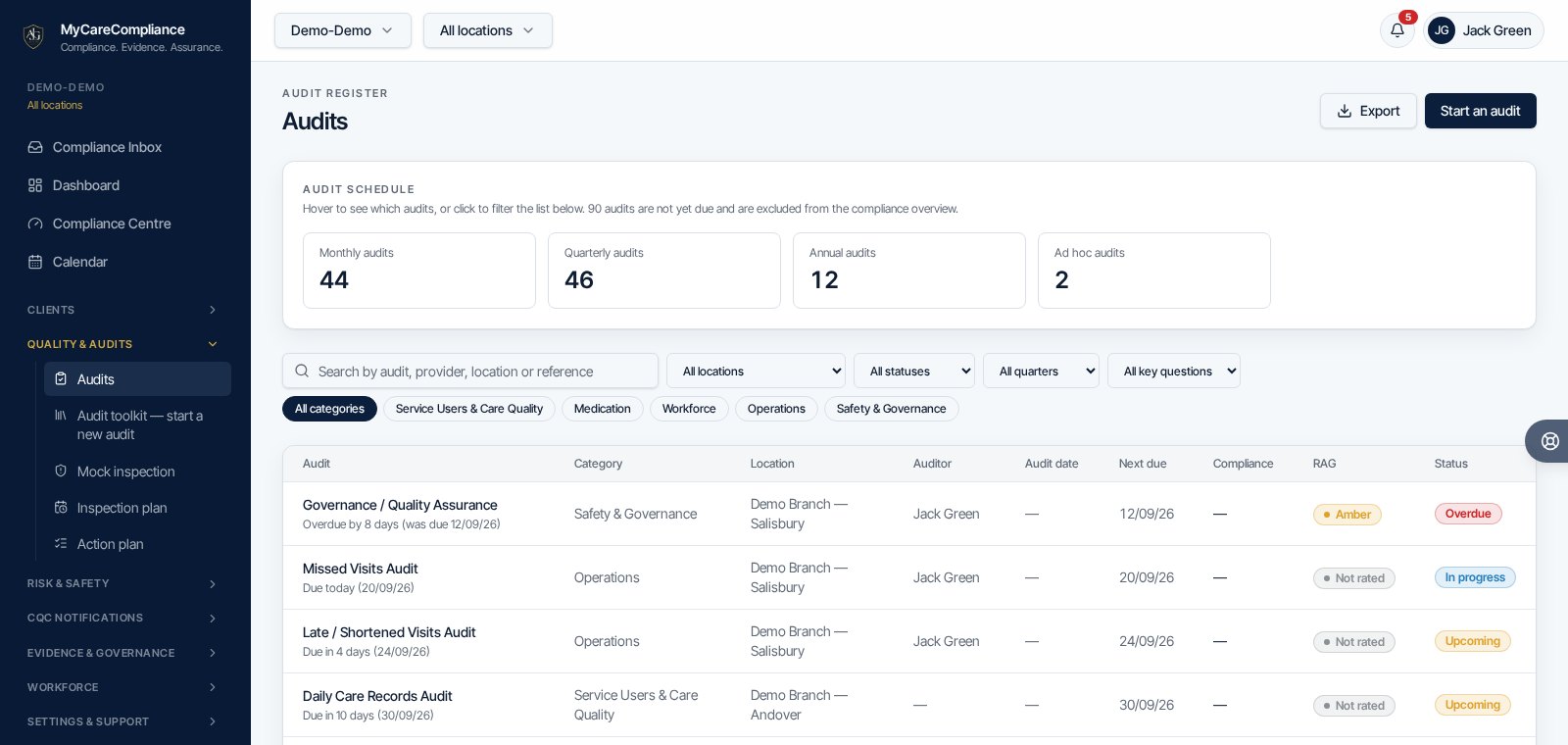
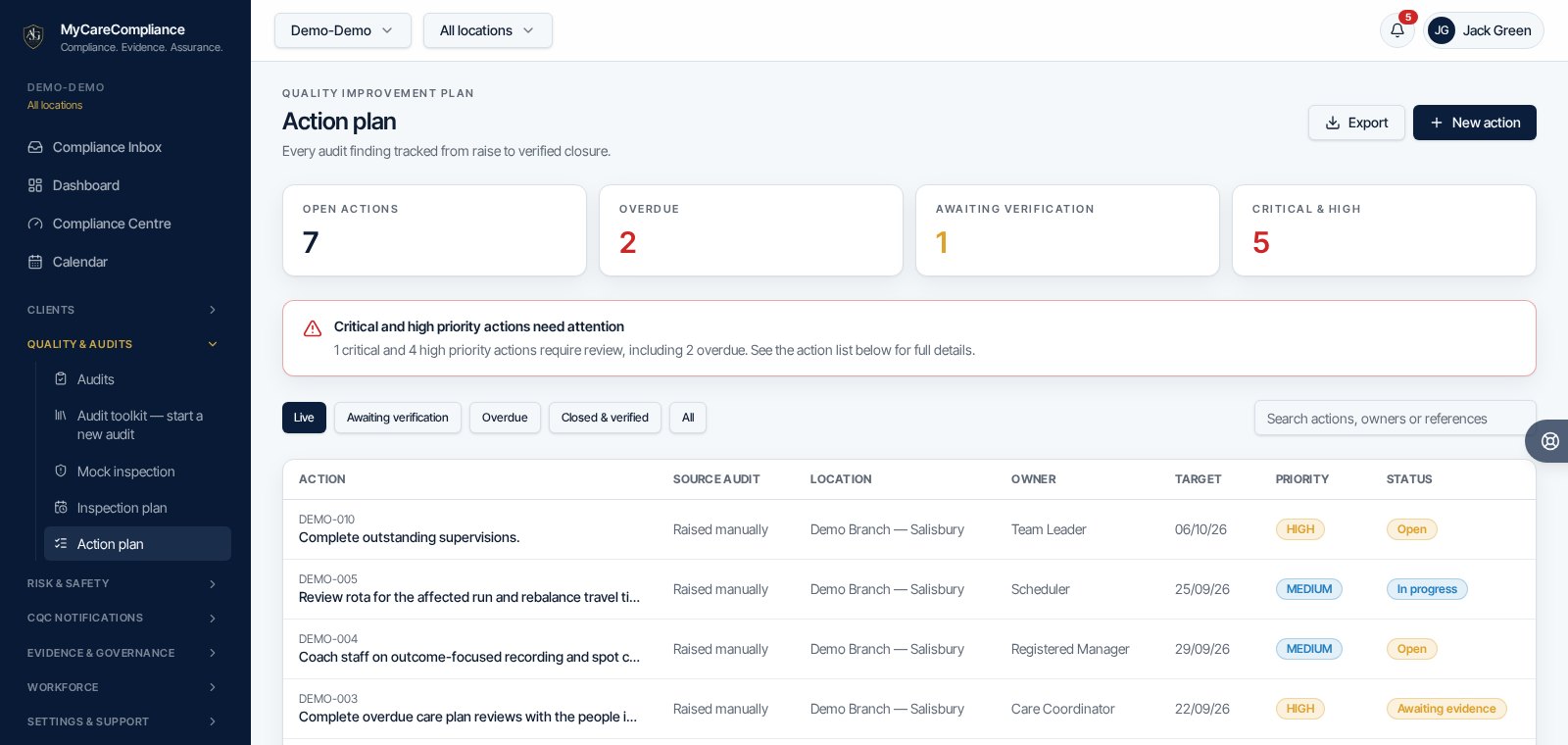
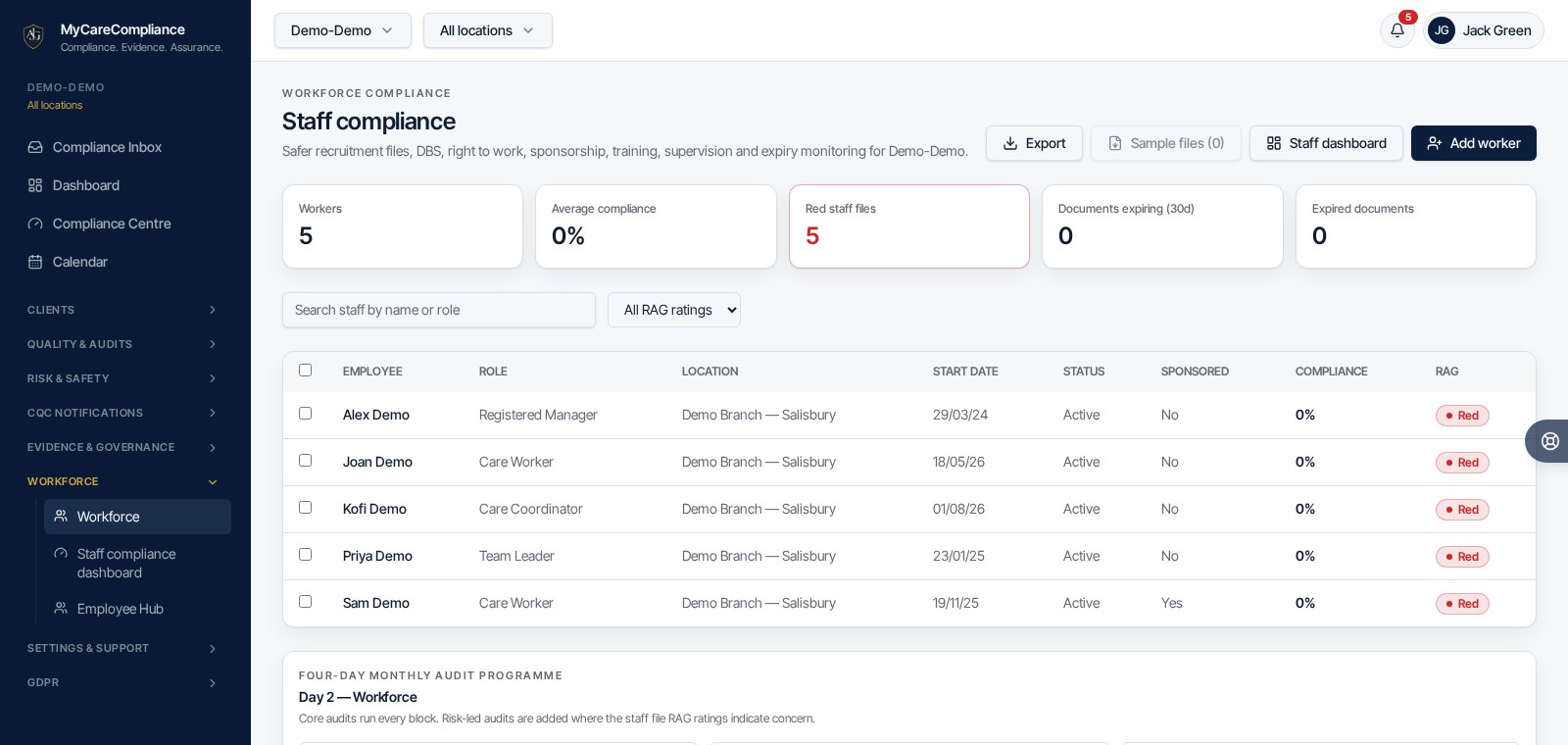
MyCareCompliance includes Supported Living Service, Positive Behaviour Support and STOMP audit templates that providers can switch on in their audit schedule. Staff records in Workforce include an Oliver McGowan training record with a renewal date, and gaps found in audits become actions with an owner and due date.
Official sources
MyCareCompliance is founded by Jack Green, ACC Accredited Care Consultant, with over 10 years in adult social care and registered manager experience. Read Jack’s background.
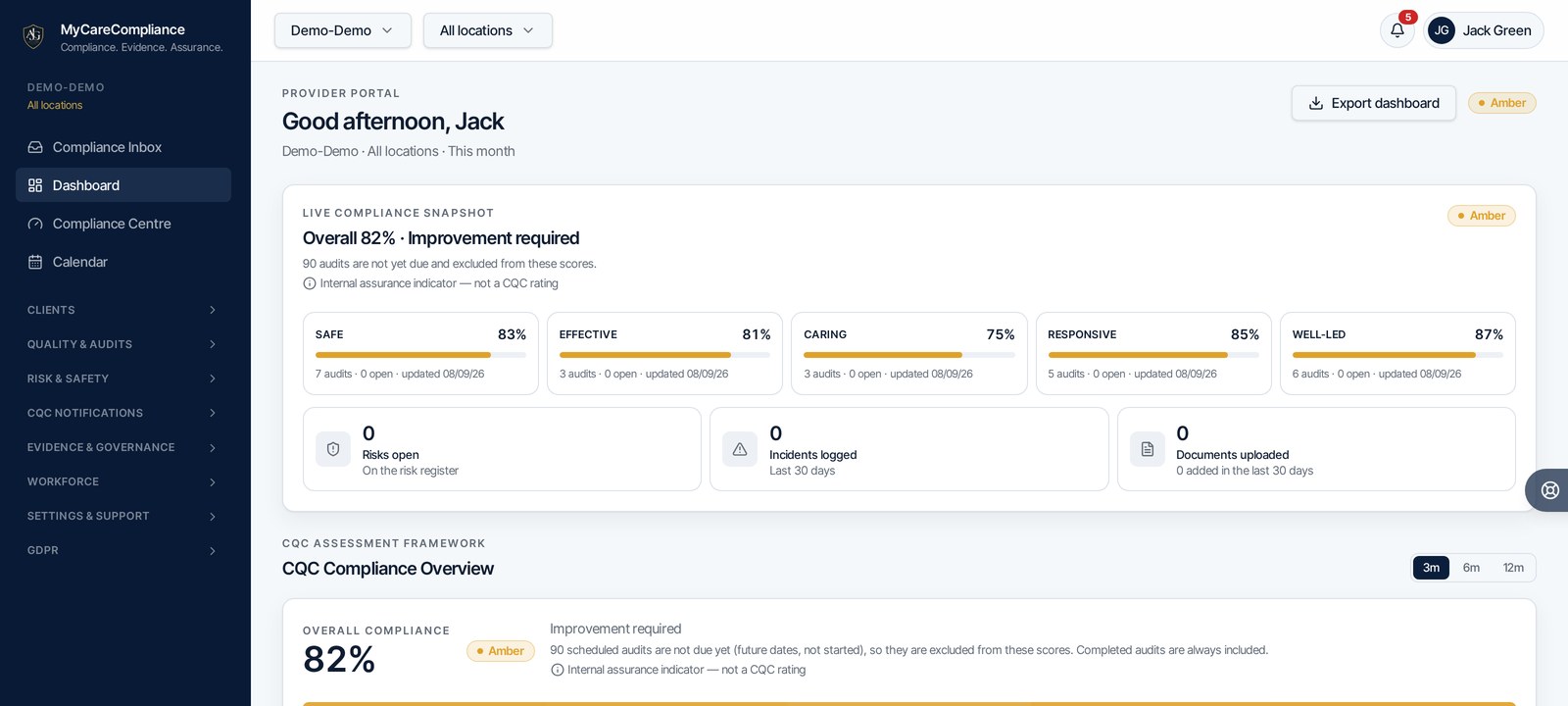
See how the platform organises this work
Genuine product screenshots using demo data. Scores show internal assurance, not CQC ratings. Features vary by plan.
Need to manage this in your service?
Use MyCareCompliance to organise audits, actions, evidence and governance in one place. 7 days free, then from £24.99 per month for the whole organisation, inclusive of VAT. Features vary by plan.
MyCareCompliance does not guarantee a CQC rating or inspection outcome.