
CQC Regulation 11 · Need for consent
CQC Regulation 11: need for consent
Regulation 11 requires that care and treatment is only provided with the consent of the relevant person. Where someone lacks the mental capacity to consent to a specific decision, the provider must act in line with the Mental Capacity Act 2005.
MyCareCompliance brings practical CQC audits, evidence, workforce oversight and improvement actions into one platform for adult social care providers.
7 days free. Plans from £24.99 per organisation per month, inclusive of VAT. Features vary by plan. Compare plans and trial terms.
Last reviewed: 28 September 2026. Independent guidance from AJG Advisory — not official CQC guidance. Always check the official sources listed below for current requirements.
Who it applies to
All CQC-registered providers. It matters most where people may have fluctuating or impaired capacity — for example people living with dementia, a learning disability or a mental health condition.
What providers should consider
- Is consent sought and recorded for care, medication support, photographs and information sharing?
- Are mental capacity assessments decision-specific and time-specific?
- Are best-interest decisions recorded with who was consulted?
- Is a Lasting Power of Attorney checked (type and registration) before relying on it?
- Where restrictions may amount to a deprivation of liberty, has the correct legal process been followed?
What evidence may be relevant
- Signed or recorded consent in care files
- Mental capacity assessments and best-interest records
- Copies or verification of LPA documents
- MCA training and competency records
Common areas to review
- Blanket capacity statements ('lacks capacity') without a specific decision
- Family members signing consent without legal authority
- Covert medication without a documented best-interest process
Internal audit questions
- 1.In sampled files, is consent recorded for each key area of care?
- 2.Are capacity assessments linked to a specific decision?
- 3.Where someone else consented, is their legal authority verified?
- 4.Have staff completed MCA training, and can they explain the principles?
Practical checklist
- Consent recorded for care, medication and information sharing
- Decision-specific capacity assessments where needed
- Best-interest decisions documented with consultees
- LPA status verified and filed
- MCA training up to date
How MyCareCompliance can help
The MCA / Consent / Best Interests audit in the library samples files against these points. Shortfalls become actions, and training renewals are tracked in workforce compliance.
Official sources
MyCareCompliance is founded by Jack Green, ACC Accredited Care Consultant, with over 10 years in adult social care and registered manager experience. Read Jack’s background.
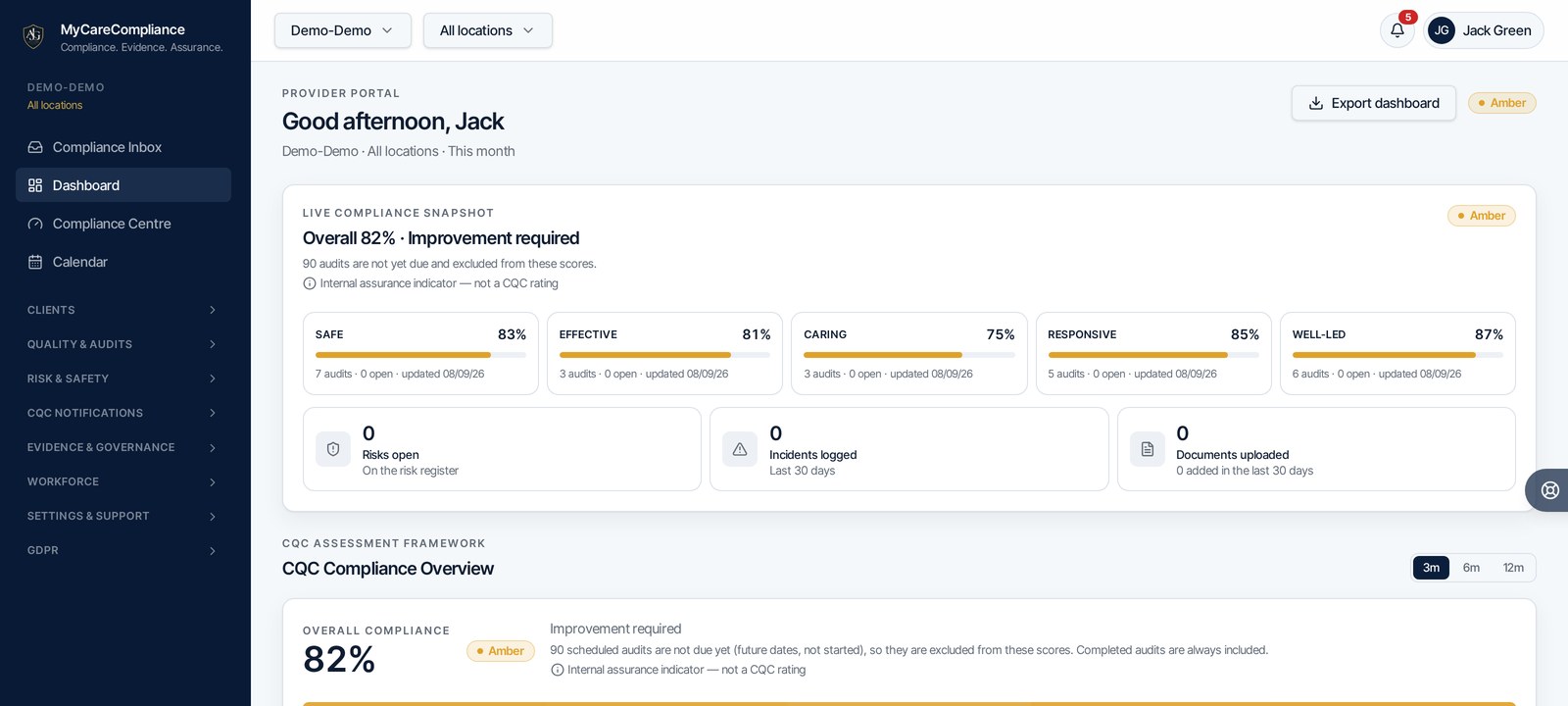
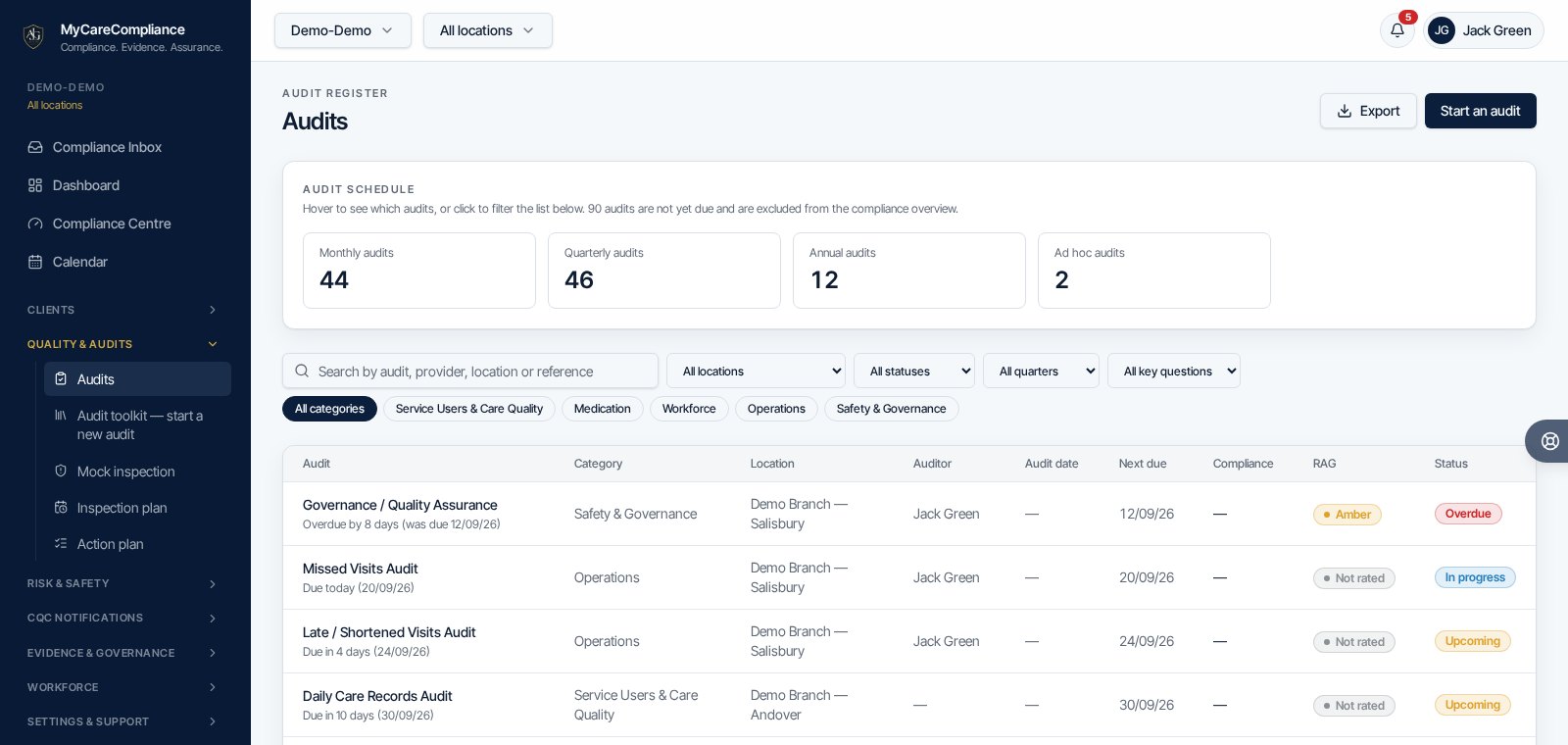
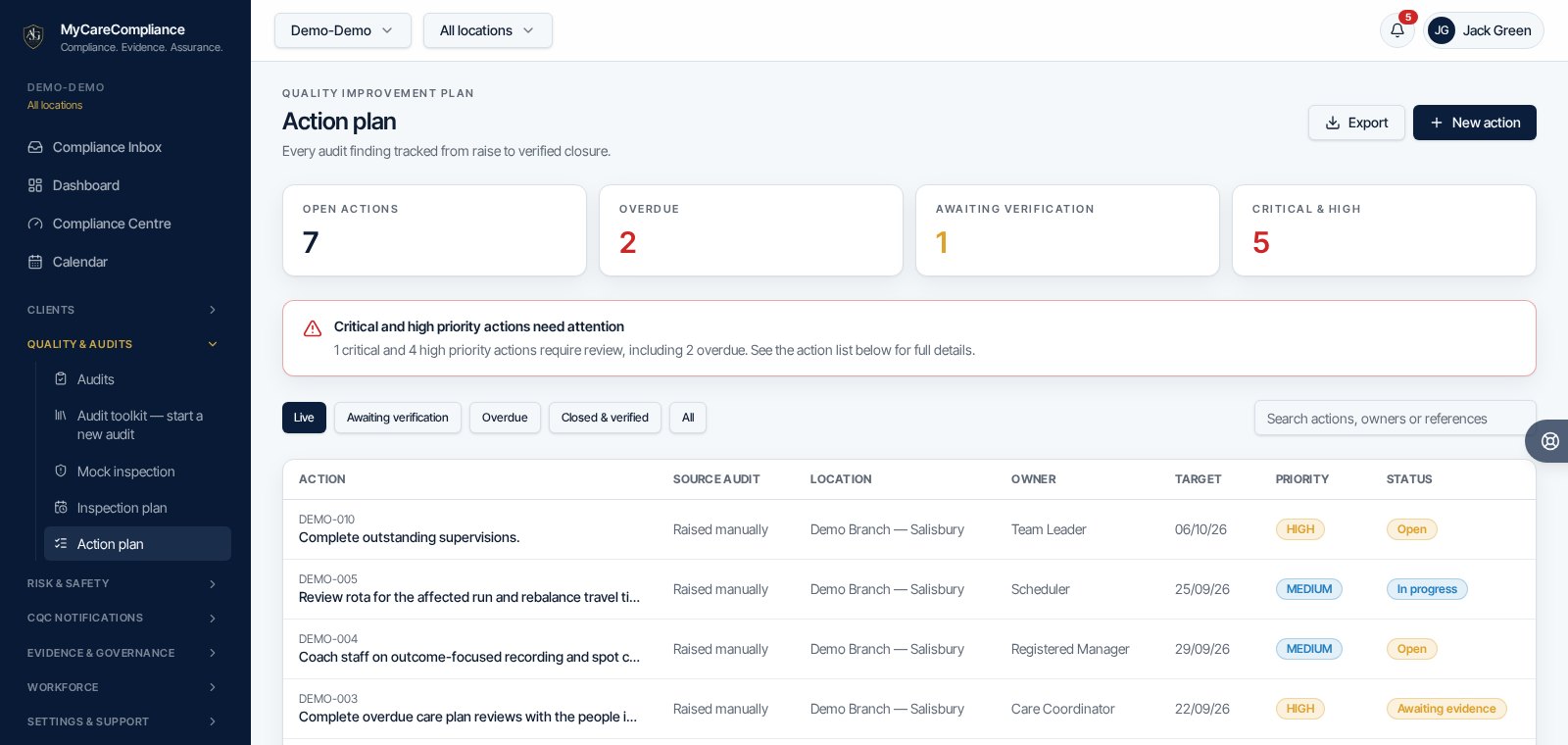
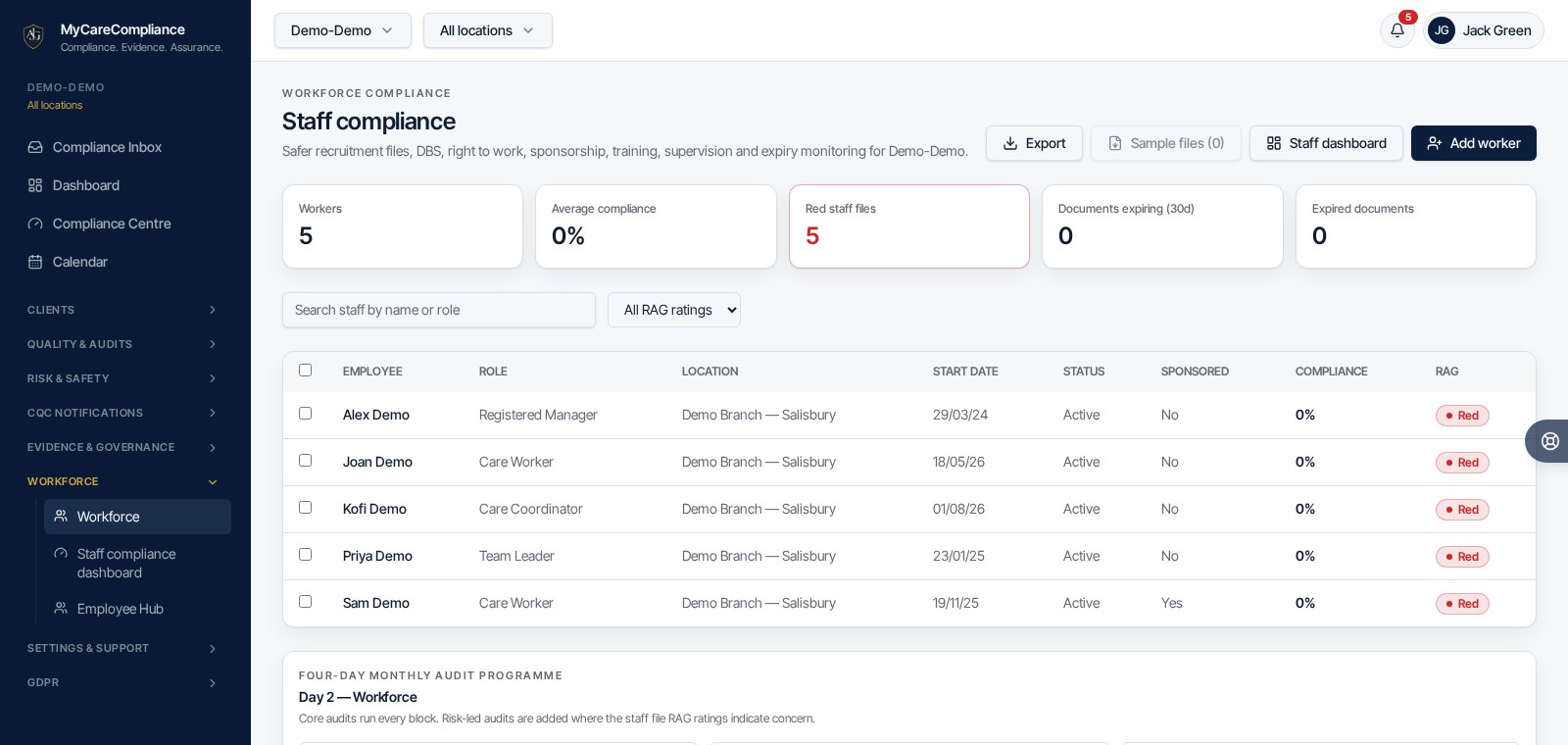
See how the platform organises this work
Genuine product screenshots using demo data. Scores show internal assurance, not CQC ratings. Features vary by plan.
Need to manage this in your service?
Use MyCareCompliance to organise audits, actions, evidence and governance in one place. 7 days free, then from £24.99 per month for the whole organisation, inclusive of VAT. Features vary by plan.
MyCareCompliance does not guarantee a CQC rating or inspection outcome.