
Audits · Medicines
MAR chart audit
A MAR (medicines administration record) audit looks closely at the charts themselves: whether every dose is signed or coded, whether the chart matches the prescription, and whether PRN and handwritten entries are safe. It is narrower and more frequent than a full medicines management audit, which also covers storage, ordering, disposal and competency.
MyCareCompliance brings practical CQC audits, evidence, workforce oversight and improvement actions into one platform for adult social care providers.
7 days free. Plans from £24.99 per organisation per month, inclusive of VAT. Features vary by plan. Compare plans and trial terms.
Last reviewed: 30 September 2026. Independent guidance from AJG Advisory — not official CQC guidance. Always check the official sources listed below for current requirements.
Who it applies to
Care homes and domiciliary care services where staff administer or support people with medicines and record it on a paper or electronic MAR.
What to check on each MAR
- Person's name, date of birth, allergies and a photograph (care homes) are present
- Every medicine matches the current prescription or pharmacy label
- No gaps: each dose is signed or has a reason code, and codes are explained on the chart
- Handwritten entries are signed by two people and dated
- PRN medicines have a protocol: what for, dose, minimum interval, maximum in 24 hours
- PRN use records the reason and the outcome
- Variable doses record the amount actually given
- Time-critical medicines (for example Parkinson's medication) are given at the prescribed time
- Stock counts for boxed medicines match what the MAR says has been given
Home care differences
In domiciliary care, the MAR must also show the level of support agreed in the care plan (prompting, assisting or administering), and missed or late visits need to be cross-checked against doses. NICE NG67 sets out good practice for medicines support in the community.
Common findings
- Unexplained gaps that nobody followed up
- PRN given regularly with no review by the prescriber
- Handwritten changes after a hospital discharge with no second signature
- Topical creams and patches not recorded or no body map
- Codes used inconsistently between staff
Internal audit questions
- 1.Were all MAR charts for the period sampled, or a set number per unit?
- 2.Were any gaps found, and was each one investigated at the time?
- 3.Do all PRN medicines have a current, person-specific protocol?
- 4.Are handwritten entries transcribed from a valid source and countersigned?
- 5.Do stock counts reconcile with the MAR?
- 6.Were errors reported as incidents and discussed with the staff involved?
Practical checklist
- Charts sampled and listed
- Gaps and code errors recorded per chart
- PRN protocols checked
- Stock count completed
- Errors logged as incidents
- Staff supervision or competency re-check arranged where needed
How MyCareCompliance can help
The Medication / MAR Audit template in MyCareCompliance covers gaps, codes, handwritten entries, PRN protocols, storage and stock balance, mapped to Regulation 12. Failed questions become actions, and medication errors can be logged in the incident register so trends show up in the governance report.
Official sources
MyCareCompliance is founded by Jack Green, ACC Accredited Care Consultant, with over 10 years in adult social care and registered manager experience. Read Jack’s background.
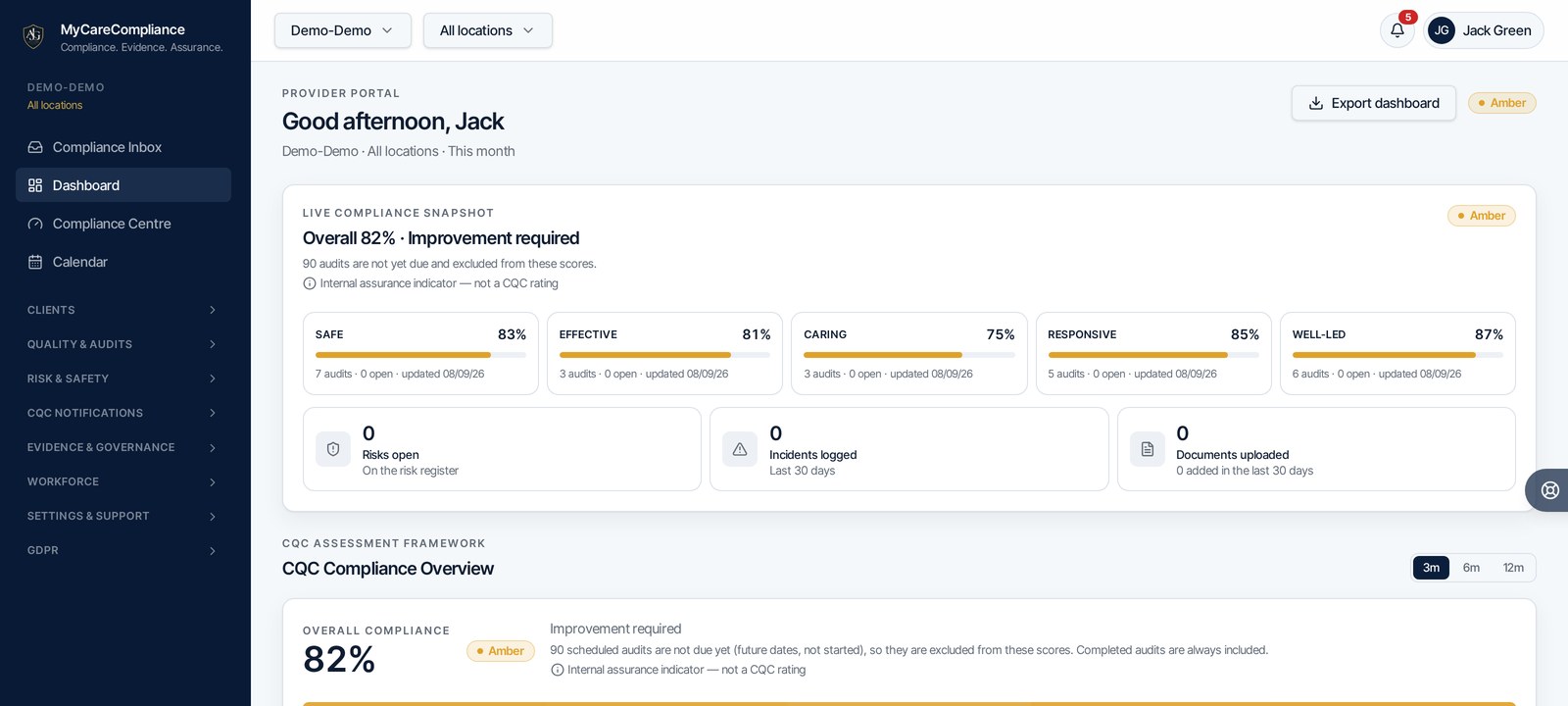
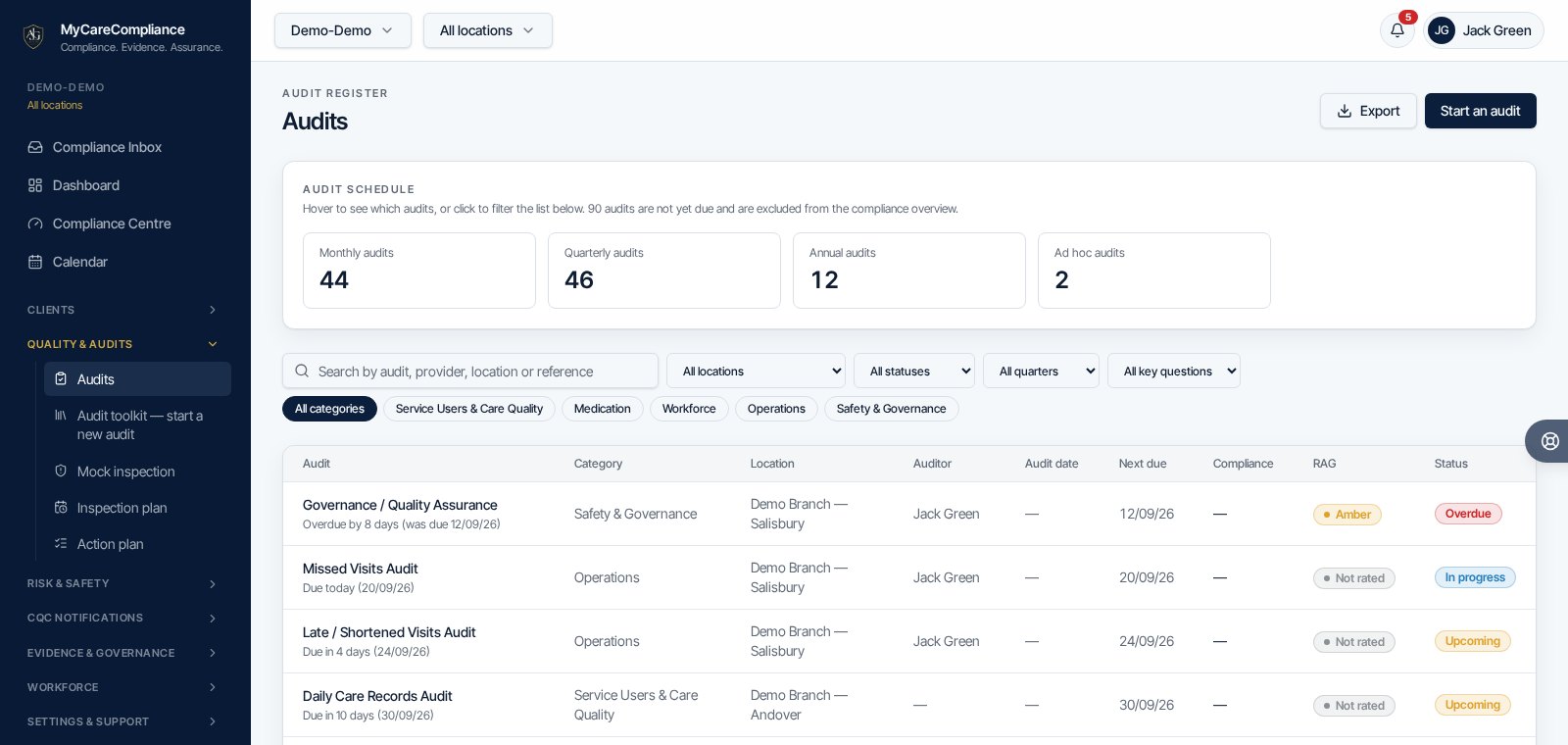
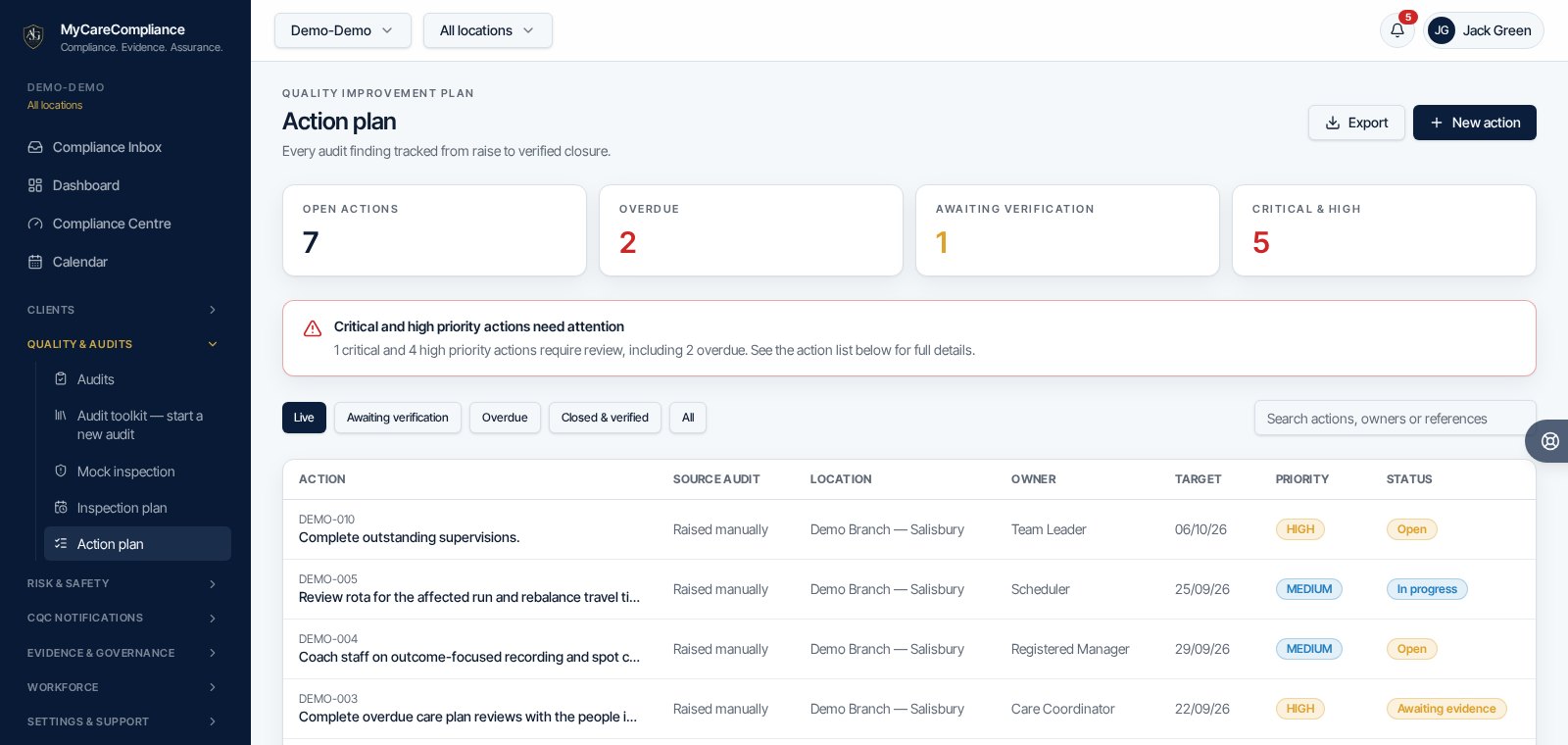
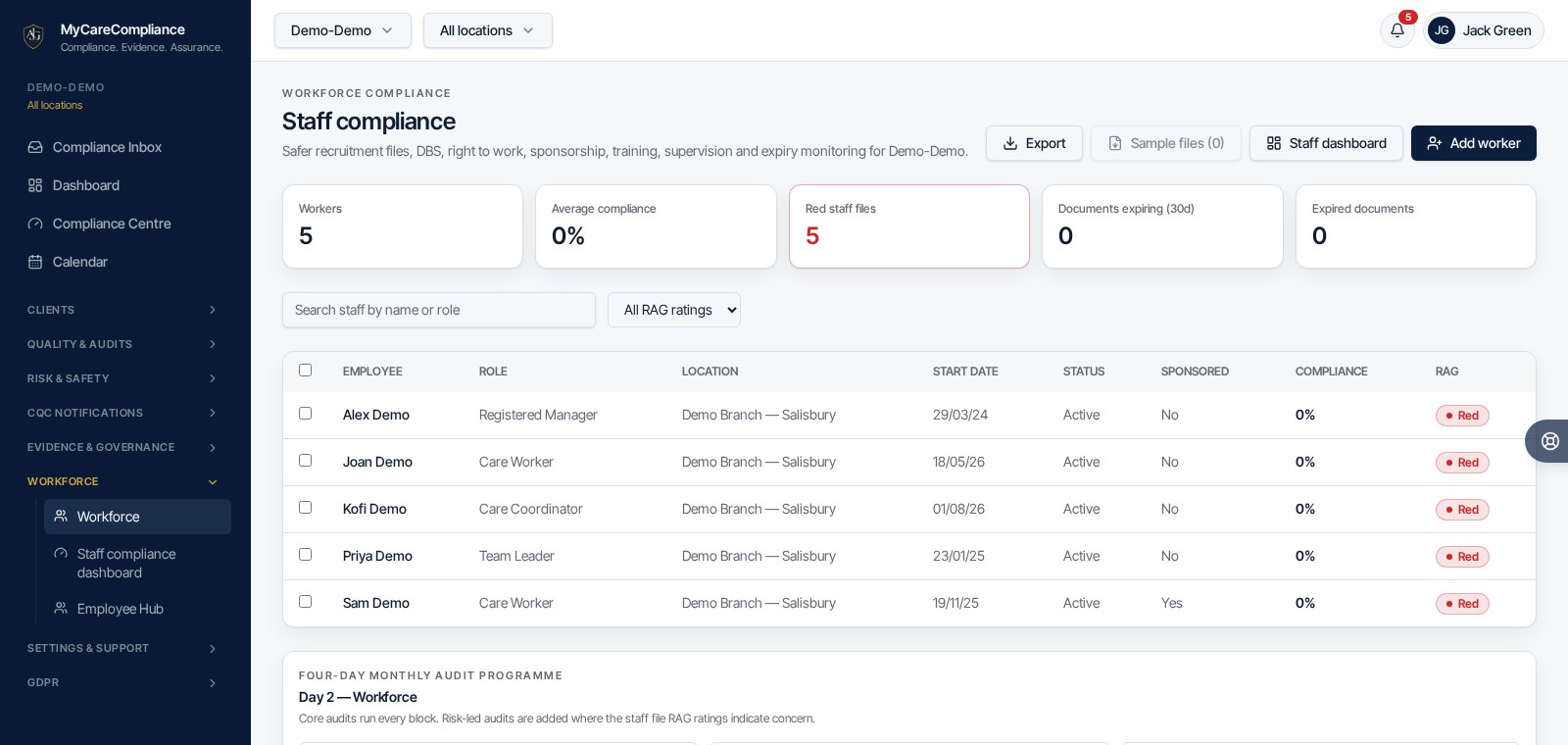
See how the platform organises this work
Genuine product screenshots using demo data. Scores show internal assurance, not CQC ratings. Features vary by plan.
Need to manage this in your service?
Use MyCareCompliance to organise audits, actions, evidence and governance in one place. 7 days free, then from £24.99 per month for the whole organisation, inclusive of VAT. Features vary by plan.
MyCareCompliance does not guarantee a CQC rating or inspection outcome.